
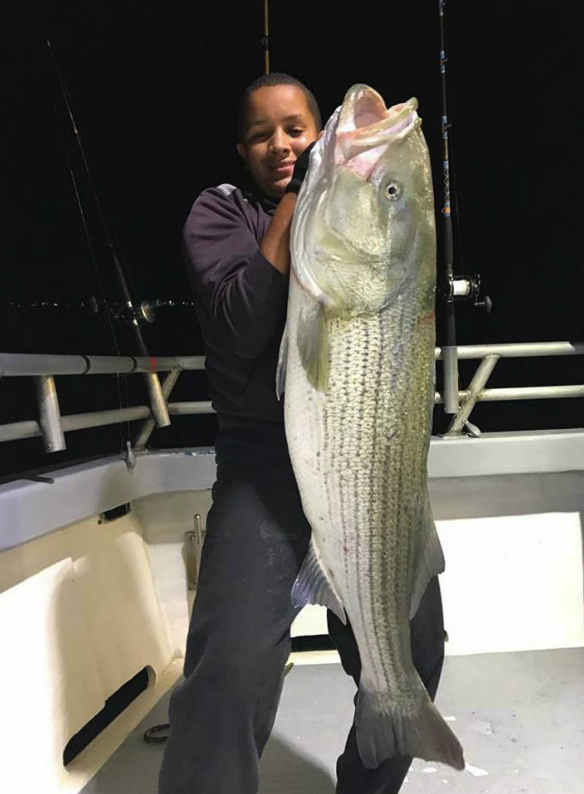
If you’re searching for a striped bass fishing report for Long Island Sound, you probably want two things. First, you want to know if the fish are biting. Second, you want to understand what that report actually means for your trip.
This guide breaks down how striped bass fishing works in Connecticut waters, what patterns are typical around Niantic, and how to read a report so you can set realistic expectations before you step on the boat. For the most current local conditions, you can always check our latest fishing report before your trip
Where Striped Bass Hold in Long Island Sound
Striped bass are structure-oriented fish. In the waters off Niantic and across Long Island Sound, they commonly relate to:
- Reefs and rock piles
- Ledges and drop-offs
- Channel edges
- Rips and tide lines
- River mouths and estuaries
A striped bass fishing report often mentions “structure” or “marks on the machine.” That usually means fish are holding tight to bottom features or suspended near bait schools.
Moving water is critical. Stripers feed most actively when the tide is running. Slack tide often slows things down.
What a Striped Bass Fishing Report Typically Tells You
A good report is more than just “we caught fish.” It should give you useful context.
Bite Quality
You may see phrases like:
- Steady pick
- Slow but improving
- Hot bite on the tide
- Short window of action
This describes consistency. A steady pick means fish were caught throughout the trip. A window bite means most action happened during a short stretch, often tied to tide movement.
Size Class
Most reports reference size in general terms:
- Schoolies (smaller bass under the legal slot)
- Slot fish (legal keeper size)
- Overslot fish (must be released)
In Long Island Sound, it’s common to catch a mix of shorts and legal fish, especially during migration periods.
Method That Worked
Reports usually mention what produced best:
- Bait fishing
- Jigging
- Trolling
This helps you understand how the fish were behaving. Aggressive jig bites often signal active fish. Bait bites can mean fish are holding and feeding more naturally.
Seasonal Striped Bass Patterns in Connecticut
Striped bass move predictably through Long Island Sound each year.
Spring
Spring fishing centers on migrating bass moving into the Sound.
What to expect:
- Increasing numbers as water warms
- Mix of smaller fish and growing keeper presence
- Strong bite around bait like bunker and herring
Spring reports often improve week by week as water temperatures stabilize.
Summer
In summer, bass settle into structure.
Typical summer conditions:
- Fish holding deeper during midday
- Better action early and late in the day
- Strong influence from tide stage
Night fishing can also be productive during warmer months.
Fall
The fall run is known for aggressive feeding.
During this time, reports may mention:
- Large schools of fish
- Surface feeds or blitz activity
- Increased keeper ratios
Wind direction and bait movement can change conditions quickly in fall.
Winter
Some striped bass remain in rivers and protected areas.
Winter fishing usually means:
- Slower presentations
- Fewer fish overall
- Consistent patterns in known locations
Patience and subtle presentations matter more in cold water.
Connecticut Striped Bass Regulations Overview
Before fishing, always confirm current regulations with Connecticut DEEP. Rules can change.
In recent seasons, Connecticut striped bass regulations have included:
- Open year round
- One fish per person per day
- Slot limit of 28 inches to less than 31 inches
- Inline circle hooks required when fishing with bait
Overslot fish must be released carefully. Proper handling improves survival and protects the fishery.
If fishing near state boundaries or on specialty trips that approach federal waters, additional rules may apply. Always follow the regulations for the waters you are fishing and the state where you land your catch.
On registered Connecticut party boats operating in the marine district, passengers generally do not need an individual CT marine fishing license. Confirm specifics with the operator if you are unsure.
Techniques That Commonly Produce Stripers
Striped bass can be caught using several reliable methods in Long Island Sound.
Bait Fishing
Bait is one of the most consistent approaches.
Common baits include:
- Bunker
- Clams
- Mackerel
- Cut bait
When using bait in Connecticut waters, inline circle hooks are required. Let the fish load the rod instead of setting the hook hard.
Jigging
Diamond jigs and soft plastics are effective when fish are holding deeper.
Success depends on:
- Staying near bottom or marked fish
- Adjusting weight for current
- Maintaining contact with the lure
Trolling
Trolling covers water when fish are spread out.
It is often used:
- During migration
- When searching for active schools
- In areas with scattered bait
What to Expect on a Party Boat Trip
If you are interested in fishing on a party boat out of Niantic, here is what typically happens. To book a party boat fishing trip, check out our website.
Booking and Check-In
- Reserve your spot online in advance
- Arrive early to check in at the ticket window
- Handle rentals and optional pools before boarding
Online purchases usually include agreement to cancellation policies. Review those terms before booking.
On the Water
The captain will:
- Run to productive areas based on current conditions
- Position the boat over structure or bait
- Adjust locations as tides change
The crew will:
- Show beginners how to use the gear
- Help with tangles and baiting
- Measure fish to confirm legal size
- Assist with safe release of oversized fish
No experience is required. Crew members provide instruction so first-time anglers can fish confidently.
Gear and Tackle
Party boats typically offer rod and reel rentals and provide guidance on proper rigs.
If bringing your own equipment, check recommended line class and setup in advance to match local conditions.
Understanding Striped Bass Size Classes
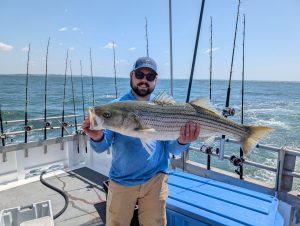
Knowing what sizes to expect helps set realistic goals.
Schoolies
- Smaller fish below the legal slot
- Common during certain parts of the season
- Great for learning technique
Slot Fish
- Within the legal keeper range
- Eligible for harvest within bag limits
- Often the primary target for anglers looking to bring fish home
Overslot Fish
- Larger bass above the slot
- Must be released
- Should be handled quickly and carefully
Using proper release techniques protects larger breeding fish and supports the long-term health of the fishery.
Best Times to Target Striped Bass
If you want to increase your chances, focus on these factors.
Tide Movement
Moving water is more important than time of day. Many strong reports mention fish biting best on the outgoing or incoming tide.
Low Light Periods
Early morning and evening can be productive, especially during summer.
Bait Activity
If a report mentions heavy bait presence, that is usually a good sign. Stripers rarely stray far from food sources.
How to Get the Most Value From a Fishing Report
Use reports as guidance, not guarantees.
Ask yourself:
- Was the bite tied to a specific tide?
- Were fish concentrated in one small area?
- Was the action steady or limited to a short window?
- What method produced best?
Matching your expectations to the conditions described in the report will improve your overall experience.
Planning Your Trip in Niantic, CT
A little preparation goes a long way.
What to Bring
- Closed toe shoes
- Weather appropriate layers
- Sunscreen
- A cooler for legal keepers
Food and Drinks
Most party boats offer basic food and non alcoholic drinks onboard. Confirm policies regarding outside food and beverages before your trip.
Fish Cleaning and Tipping
On many party boats, mates can clean your fish for a nominal fee. Tipping the crew is customary and reflects the level of service provided.
Why Long Island Sound Is a Strong Striped Bass Fishery
Long Island Sound continues to produce striped bass because of:
- Strong tidal flow
- Extensive reef systems
- Abundant bait migration
- Healthy estuaries and river systems
Combined with experienced local captains who understand seasonal movement, these factors create consistent opportunities for anglers of all skill levels.
A striped bass fishing report should help you understand conditions, techniques, and expectations. When you know how to read it and what influences the bite in Long Island Sound, you are better prepared to enjoy your time on the water and make the most of your trip.
Striped Bass Fishing Report FAQs
Where are striped bass biting in Long Island Sound?
Striped bass in Long Island Sound commonly hold on reefs, rock piles, channel edges, rips, and river mouths. Reports often highlight areas with strong tidal movement and concentrated bait schools. Productive zones can shift with wind and current, so location details in reports are usually tied to structure and tide.
What is the best time to catch striped bass in Connecticut?
The best time to catch striped bass in Connecticut is usually during moving tides, especially around dawn and dusk. Spring and fall are known for strong migration bites, while summer often produces better action during early morning, evening, or night hours. Reports that mention a “tide window” are often pointing to the most productive part of the trip.
What size striped bass can you keep in Connecticut?
Connecticut striped bass regulations have recently included a slot limit of 28 inches to less than 31 inches with a one fish daily bag limit. Fish outside that slot, including larger overslot bass, must be released. Because regulations can change, always confirm current rules with Connecticut DEEP before fishing.
What bait works best for striped bass in Long Island Sound?
Common productive baits in Long Island Sound include bunker, clams, mackerel, and cut bait. Many reports note whether fish are responding better to natural bait or artificial lures like jigs and soft plastics. When fishing with bait in Connecticut waters, inline circle hooks are required to improve survival of released fish.
Do you need a fishing license for striped bass on a party boat in CT?
On registered Connecticut party boats operating in the marine district, passengers generally do not need an individual CT marine fishing license. The vessel carries the required registration for covered trips. If you are unsure about your specific trip or fishing in different waters, confirm details with the boat operator before departure.
About the Captain: Captain Greg Dubrule
Captain Greg Dubrule has spent more than four decades in the fishing business and knows Connecticut’s Long Island Sound like a local map you can’t buy in a tackle shop. As the captain of the Black Hawk out of Niantic, CT, Greg’s focus is simple: run safe, well-organized trips and help anglers of all experience levels have a great day on the water—whether you’re chasing striped bass, filling a cooler with sea bass and scup, or bringing the family out for their first trip.
When Greg isn’t running trips, he’s thinking about the same things serious Sound anglers obsess over: tides, bait movement, water conditions, and where the next bite is going to break open. If you’ve ever wondered why some boats consistently find fish, that’s the difference—time on the water, paying attention, and putting the pieces together day after day.